How to Integrate ProEst into Your Enterprise AI Tech Stack
Cost overruns are a data problem—treat them like one
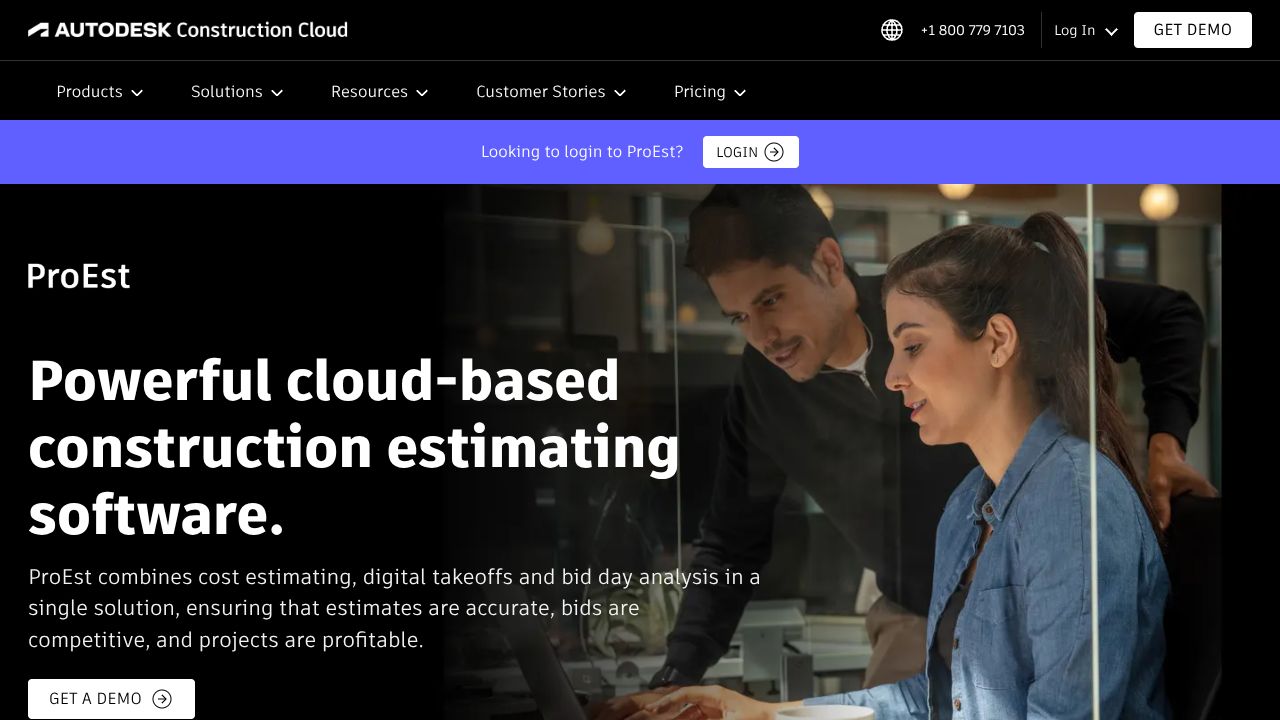
ProEst is a cloud-based estimating system built for construction professionals who need granular cost analysis and disciplined budgeting. For AI leaders, it represents a structured, scalable data backbone for downstream prediction, optimization, and margin control in a volatile market. Bottom line: standardizing how you estimate today unlocks how you automate tomorrow.
The Business Case
In our team’s discussions with construction CIOs and operations chiefs, the same pattern emerges: estimate-to-actual variance is the single most powerful margin lever most firms haven’t systematized. ProEst matters because it consolidates estimating workflows in the cloud, creating clean, consistent, and queryable data across bids, trades, regions, and time. That data becomes the substrate for AI models—forecasting costs, flagging risk, and learning from historical variance.
The ROI case is straightforward. For a portfolio with $100M in annual bid volume, even a 1–2% improvement in estimate accuracy can preserve $1–2M in margin. Standardized estimating also compresses cycle times, increasing bid throughput without adding headcount. Budget integrity improves too: disciplined line-item structures and historical benchmarks reduce change-order exposure and improve vendor negotiations. Strategically, ProEst positions your organization to evolve from artisanal estimating to an evidence-based, continuously learning system—one that your AI roadmap can leverage to automate repetitive steps and elevate expert judgment where it matters.
Key Strategic Benefits
-
Operational Efficiency: Our team has seen cloud-based estimating cut coordination friction by eliminating version chaos and spreadsheet drift. Centralized templates, shared cost libraries, and auditable changes shorten bid cycles and align estimating, procurement, and project management around a single source of truth.
-
Cost Impact: Precise, line-item cost controls help protect margin by reducing variance and surfacing negotiation opportunities with suppliers and subs. Over time, you can use the accumulated data to benchmark productivity, set guardrails for risky bids, and prioritize high-probability, high-margin opportunities.
-
Scalability: As your footprint grows, standardized structures enable rapid onboarding of new teams and consistent performance measurement across regions. For AI leaders, a common schema accelerates model development—classification, anomaly detection, and prediction pipelines don’t need to relearn idiosyncratic formats for every estimator.
-
Risk Factors: We’ve learned from our community that tool success hinges on adoption and data hygiene. Watch for inconsistent coding across trades, weak integration discipline with ERP/CRM, and vendor lock-in concerns; build data governance, export strategies, and integration testing into the plan from day one.
Implementation Considerations
Plan a phased rollout anchored on measurable KPIs: estimate-to-actual variance, bid throughput, cycle time, rework rate, and win rate. A typical enterprise pilot runs 8–12 weeks across two to three business units, with an implementation squad that includes estimating leads, a project manager, a data engineer (for data model definition and extract pipelines), and a change champion from operations.
Integration is where AI leaders should lean in. Map how ProEst will align with your ERP, procurement, and document control systems; design a shared cost taxonomy early to avoid reconciliation debt later. Validate export pathways and APIs for downstream analytics and model training. On the human side, our team’s experience mirrors board-game strategy: set clear rules, practice with small stakes, and review every “move” via weekly retrospectives. Provide role-based training, define template ownership, and establish a governance forum to approve changes to cost libraries and coding standards. Security, SSO, and permissioning should be part of initial technical due diligence.
Competitive Landscape
While Estimate Rocket excels at contractor-friendly estimating with integrated invoicing and lightweight project management, ProEst is better suited for organizations prioritizing enterprise-grade cost analytics, deeper budgeting rigor, and standardized data structures for AI initiatives. PlanSwift is a powerhouse for digital takeoff and measurement; if your primary gap is plan quantification, PlanSwift leads, but ProEst is stronger as the cost modeling and budgeting nucleus—often paired with takeoff solutions in a complementary stack. Buildxact enables small builders with an all-in-one approach to estimating and job costing, delivering speed and accessibility at an SMB-friendly price point; ProEst fits mid-market to enterprise environments that need multi-team governance, cross-project analytics, and a richer dataset to feed predictive tools. In short, choose the tool that matches your scale, data ambitions, and integration rigor.
Recommendation
Our team’s guidance for AI leaders: shortlist ProEst for a 90-day pilot focused on reducing estimate-to-actual variance by at least 1%. Stand up a cross-functional squad, define a common cost taxonomy, and build an analytics layer to track KPIs from day one. In parallel, benchmark TCO and fit against Estimate Rocket, PlanSwift, and Buildxact. Finally, ensure data exportability and integration pathways align with your AI roadmap—predictive bidding, risk alerts, and procurement optimization depend on the quality of the estimating backbone you establish now.
External Resource
Access ProEst →